Edit less: how a correct capture cuts post-production in half
Editors spend most of their time fixing what the room did. A configured studio removes that work before it exists.
Ask an editor where the hours go. Not into cutting content: into noise removal, levelling, de-essing and fixing the echo from the glass wall. All of that is a capture problem.
Levels set once
Gain staged at installation and saved in a template means episodes arrive at a consistent level. No normalising, no surprises.
Processing at the desk
A light compressor and a high-pass filter on each channel, set by an engineer, do in real time what plugins do in post. The editor receives files that already sound finished.
Separate tracks
Multitrack recording lets the editor mute a cough on one channel without touching the other voice. It is the single largest time saver in podcast editing.
The room
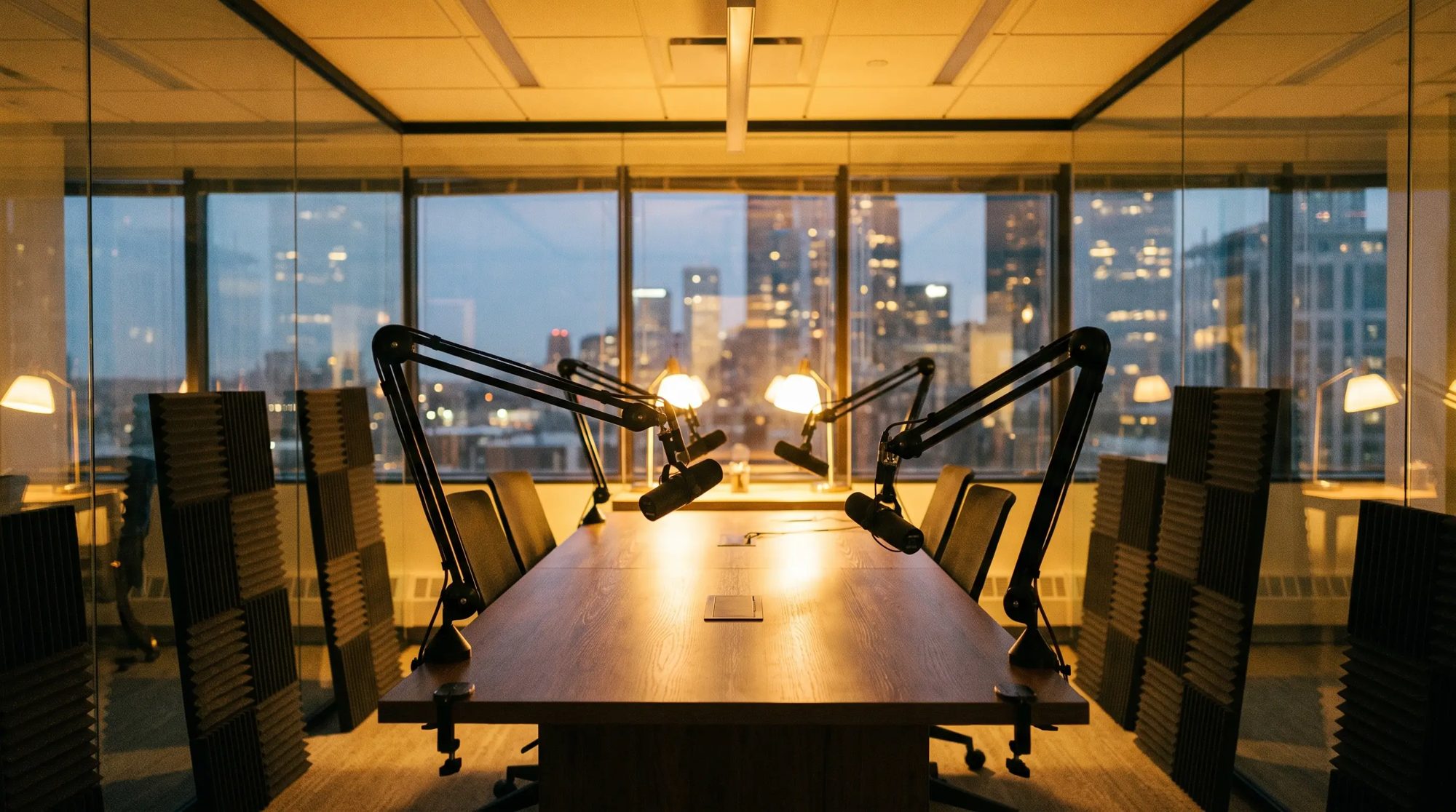
Treated reflections cannot be undone in software. A panel behind each host costs less than one month of editing hours.
The result
Clients who moved from a laptop-and-USB-mic setup to a configured studio report editing time dropping from three hours per episode to about one.
Audio Configuration is included in every installation and available as a standalone Consulting session for an existing room.
Keep readingAll articles